Medieval Monetary Epigraphy: The Oldest Sovereign Currency in Continuous Use
The British pound sterling (£) holds the undisputed distinction of being the world’s oldest sovereign currency still in continuous active circulation, with unbroken institutional roots tracing back over twelve hundred years to the Anglo-Saxon kingdoms of the eighth century.
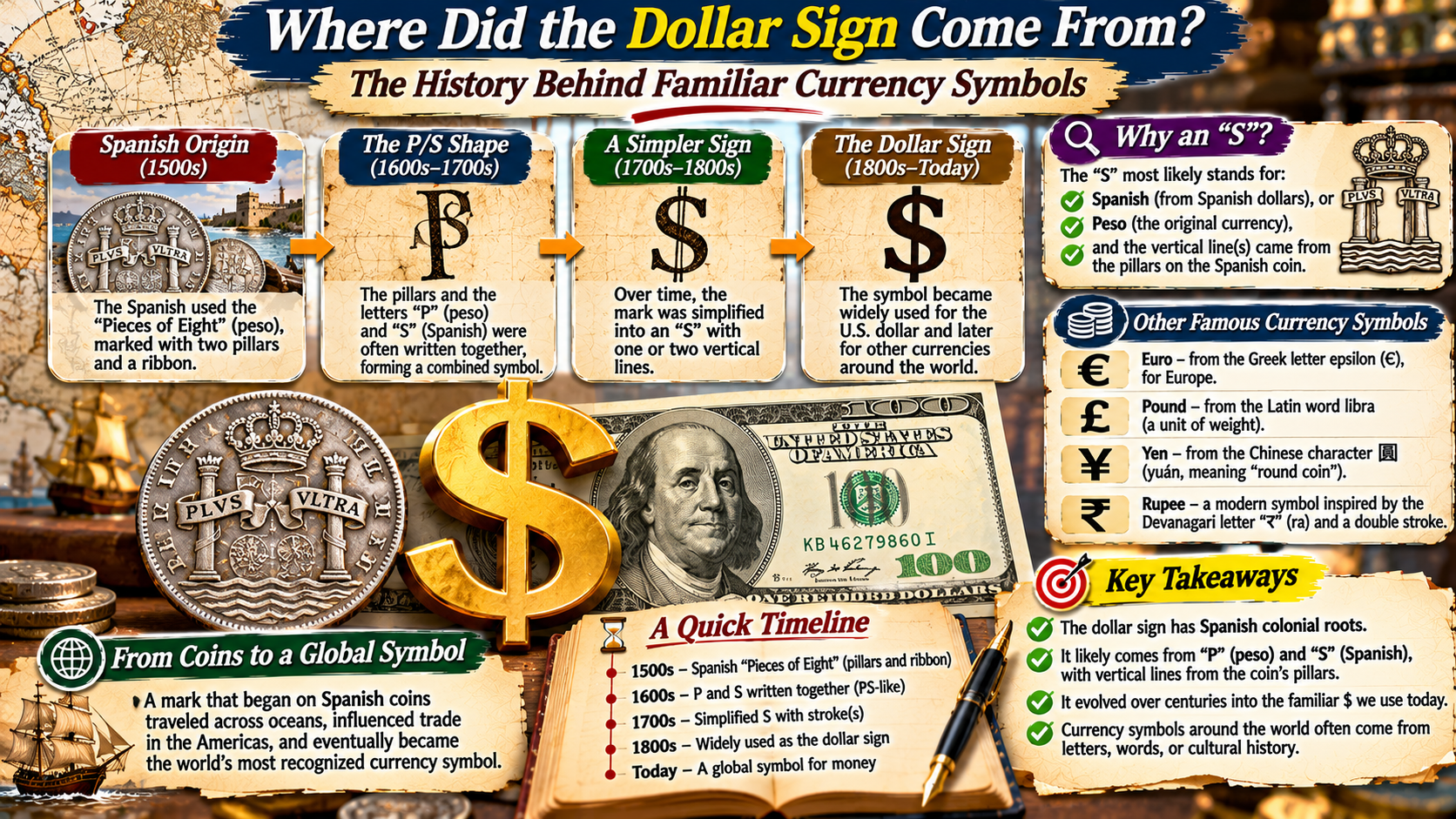
Its elegant typographic symbol—an ornate, cursive Roman capital letter ‘L’ intersected by one or two horizontal crossbars (£)—embodies the profound continuity of European administrative law, medieval treasury bookkeeping, and the Roman weight measurement known as the libra.
🪙
Part I: Classical Roots
The Etymological Genesis: From Roman Libra to Saxon Sterling
To unravel the historical DNA of the pound sterling symbol, one must journey back to the administrative metrology of the Roman Empire. In classical Latin, the fundamental unit of mass and weight measurement was the libra (plural librae), specifically defined as the libra pondo—literally translating to ‘a pound by weight’ (from which the English language derived both the word ‘pound’ via pondo and the postal abbreviation ‘lb’ via libra). In Roman imperial accounting, quantities of unminted gold or silver bullion were calculated in librae, establishing a pan-European standard that survived the collapse of Roman administrative authority in Britain in the fifth century CE.
The monetary link between the Roman libra and English coinage was forged in roughly 775 CE during the Anglo-Saxon heptarchy under the powerful reign of King Offa of Mercia. Prior to Offa, Britain conducted trade through irregular silver sceattas and gold thrymsas. Offa instituted a sweeping monetary reform modeled upon the contemporary Frankish reforms of Charlemagne, establishing the silver penny (denarius in Latin, pening in Old English) as the national currency. Crucially, Offa declared that exactly two hundred and forty silver pennies would be struck from a single Tower pound of high-purity silver (weighing approximately 5,400 troy grains, or 350 grams).
This Anglo-Saxon metrological equation established the celebrated £sd monetary accounting system that governed British commercial life for more than a millennium until Decimal Day in 1971: 1 Pound (£, from libra) equaled 20 Shillings (s, from the Roman solidus), and 1 Shilling equaled 12 Pence (d, from the Roman denarius), meaning exactly 240 pence equaled one full pound sterling. Thus, when an Anglo-Saxon nobleman or medieval merchant held a ‘pound sterling’, they did not hold a single physical coin—for no one-pound coin existed in England until Henry VII introduced the gold sovereign in 1489—they held an abstract, highly trusted unit of account representing a physical pound weight of pure silver pennies.
| Latin Metrological Root | English Denomination Name | Historical Symbol | Mathematical Ratio | Physical Basis & Purchasing Power |
|---|---|---|---|---|
| Libra (Pound by Weight) | Pound Sterling | £ (or L) | 1 Pound = 20 Shillings = 240 Pence | Originally 1 Tower pound of 92.5% pure silver; major estate settlement |
| Solidus (Imperial Roman Gold) | Shilling | s. (or /) | 1 Shilling = 12 Pence (1/20 of £) | Introduced as testoon under Henry VII; skilled artisan weekly wage |
| Denarius (Roman Silver Coin) | Penny | d. | 1 Penny = 4 Farthings (1/240 of £) | The universal silver workhorse of medieval England; daily food ration |
| Semi-Denarius | Halfpenny (Ha’penny) | 1/2 d. | 2 Halfpence = 1 Penny | Silver (later copper) fractional piece for small market retail trade |
| Quadrans (Fourth Part) | Farthing | 1/4 d. | 4 Farthings = 1 Penny | Smallest medieval circulation coin; loaf of bread or ale measure |
⚖️
Part II: The Sterling Standard
The Meaning of ‘Sterling’: The Easterlings and Metallurgical Integrity
Why is the British pound specifically designated as ‘sterling’? Numismatic etymologists have proposed several compelling historical theories, all converging upon an unyielding guarantee of metallurgical purity. The most authoritative historical hypothesis traces the term to the Hanseatic League merchants of northern Germany, whom the Anglo-Normans referred to as ‘Easterlings’ (men from the east). In the twelfth and thirteenth centuries under King Henry II and King Richard the Lionheart, German Easterling traders brought vast quantities of exceptionally pure, reliable silver coins to London to exchange for premium English wool. Impressed by their consistent metallurgical purity, Henry II employed Hanseatic refiners to reorganize the Royal Mint inside the Tower of London, adopting their silver purity standard as the official ‘Easterling’—subsequently shortened to ‘sterling’—standard of England.
A second prominent etymological hypothesis derives the word from the Old English stéorling, meaning ‘little star’, referencing early Anglo-Saxon silver pennies struck with small celestial stars or cross-and-star designs in their reverse angles. Regardless of the exact linguistic root, King Henry II codified the legal definition of sterling silver in 1158 during the introduction of the Tealby silver penny: sterling silver was officially defined as an alloy consisting of 925 parts pure silver and 75 parts copper per thousand (92.5 percent fine).
This precise ratio was mathematically brilliant: pure silver alone is too soft and malleable to endure circulating in pockets and leather pouches without rapid surface wear and edge clipping, while the addition of exactly 7.5 percent base copper provided structural hardness without noticeably diminishing the brilliant white metallic luster of the silver. For more than seven hundred years, the Royal Mint maintained this 92.5 percent sterling standard with fanatical administrative devotion, defended by the annual Trial of the Pyx—a rigorous, independent metallurgical audit conducted by the Worshipful Company of Goldsmiths that persists in London to this day.
🏛️
Part III: Typographic Anatomy
The Typographic Anatomy: Cursive Ligatures and the Horizontal Crossbar
The visual design of the modern pound symbol (£) is a masterpiece of medieval scribal orthography. In medieval Latin manuscripts and royal chancery rolls, scribes faced the daily burden of writing thousands of words and units of measurement by hand using quill pens on expensive animal vellum and parchment. To conserve parchment space and maximize writing speed, medieval scribes developed an elaborate system of standardized paleographic ligatures, suspensions, and contractions.
When recording monetary sums in Latin account books, a clerk wrote the capital letter ‘L’ (standing for librae). However, in standard medieval calligraphy, a simple unadorned letter ‘L’ could be easily misread as the Roman numeral fifty (L), the letter ‘I’, or part of an adjoining word. To signal to any reader that the letter was not a normal phonetic character, but rather an official abbreviation or special unit of measure, scribes drew a horizontal stroke or tittle (crossbar) directly through the vertical stem of the letter. This stroke served the identical paleographic function as the horizontal bar on the letter ‘t’ or the tilde (~) placed over abbreviated Latin words.
As gothic blackletter and cursive chancery scripts evolved into the elegant Italian humanist script during the Renaissance, the rigid Roman ‘L’ softened into an elegant, flowing cursive glyph with a graceful looping descender and an arched upper curve. The horizontal crossbar was retained across the waist of the letter. In contemporary typography, the symbol appears with both a single crossbar (£) and occasionally two crossbars, though the single-bar variant is the universal legal standard established by the Bank of England and the International Organization for Standardization (ISO 4217 code GBP).
👑
Part IV: The Exchequer System
The Exchequer Tally Sticks: Physical Accounting in Medieval England
The administrative authority of the pound sterling was cemented within the Royal Exchequer—the central financial department of the English Crown established under King Henry I in the early twelfth century. The Exchequer derived its name from the large checkered cloth (scaccarium), resembling a chessboard, spread over the council table, upon which royal officials calculated tax revenues collected by county sheriffs using bronze counters.
To record tax payments and royal debts settled in pounds sterling, the medieval Exchequer utilized an ingenious, fraud-proof physical device: the tally stick. Hazelwood sticks, approximately eight to nine inches long, were cut from local forests. Royal clerks carved deep transversal notches across the wood representing specific denominations in the £sd system: a notch the width of a human thumb represented one hundred pounds sterling; a notch the width of a little finger represented twenty pounds; a notch the width of a barleycorn represented one pound; and smaller scratches represented shillings and pence.
Once the notches were carved, the stick was split lengthwise down the center through the notches, creating two asymmetric halves: the ‘stock’ (the longer piece, retained by the creditor or taxpayer, from which the modern financial terms ‘stock’ and ‘stockholder’ originate) and the ‘foil’ (retained by the royal treasury). Because the grain of the wood, natural knots, and hand-carved notches were entirely unique to that specific piece of timber, counterfeiters could not manufacture a matching stock. These Exchequer tally sticks functioned as circulating paperless bonds throughout England until the nineteenth century, demonstrating that the pound sterling was always an abstract sovereign credit contract underpinned by state taxation.
📜
Part V: Decimal Day & Modern Era
The Bank of England and Decimal Day 1971: Modernizing the Sovereign Glyph
The transformation of the pound sterling from an accounting abstraction into circulating paper currency arrived with the founding of the Bank of England in 1694. Created to raise £1.2 million to rebuild the English navy following defeat by the French at the Battle of Beachy Head, the Bank of England issued the world’s first permanent corporate banknotes, inscribed with the solemn promise: ‘I promise to pay the bearer on demand the sum of [X] Pounds.’ Struck with the elegant cursive £ symbol in copperplate engraving, these notes established London as the undisputed banking capital of the globe.
For centuries, British school children and foreign traders struggled with the non-decimal arithmetic of the £sd system: calculating that two pounds, fourteen shillings, and seven pence plus three pounds, eight shillings, and nine pence equaled six pounds, three shillings, and four pence required complex base-12 and base-20 mental mathematics. On February 15, 1971—a watershed moment known in British social history as ‘Decimal Day’—the United Kingdom executed the massive conversion to decimal currency. The ancient shilling and the Latin denarius ‘d’ were permanently retired; the pound (£) was retained as the undisputed sovereign unit, but was henceforth divided cleanly into one hundred ‘new pence’ (p).
In the digital era, the pound sterling symbol was assigned Unicode code point U+00A3, ensuring its permanent typographic presence across computer operating systems, global financial messaging networks, and smartphone keyboards worldwide. Today, as the United Kingdom issues polymer banknotes featuring King Charles III alongside British luminaries like Winston Churchill, Jane Austen, J.M.W. Turner, and Alan Turing, the enduring £ symbol stands as an unbroken typographic bridge connecting twenty-first-century electronic markets directly to the Roman librae, Saxon silversmiths, and medieval tally sticks that laid the foundations of international finance.
Key Takeaways: The Pound Sterling Sign (£)
Roman Libra Ancestry: The symbol £ is a stylized cursive Roman capital ‘L’, representing the Roman unit of weight measurement (libra pondo).
The £sd System: King Offa established that 240 silver pennies equaled one pound of silver, creating the 1:20:240 accounting ratio that governed Britain until 1971.
The Meaning of Sterling: Derived from Hanseatic ‘Easterling’ merchants or the Old English ‘stéorling’ (little star), codifying 92.5% pure silver in 1158.
The Horizontal Crossbar: Added by medieval scribes to indicate an official abbreviation, preventing confusion with the Roman numeral fifty or standard letters.
The Trial of the Pyx: Britain’s Eight-Century Metallurgical Defense of the Pound
To safeguard the absolute integrity of the pound sterling (£) across centuries of turbulent monarchies and wars, England established the most rigorous, continuous quality-control judicial ceremony in world history: the Trial of the Pyx. Originating in the twelfth century during the reign of King Henry II and formally codified by King Edward I in 1282, the trial derives its name from the ‘pyx’ (from the Greek pyxis, meaning a box or chest of boxwood), a locked oak chest kept in the Treasury of the Kings at Westminster Abbey.
Throughout the year, as millions of gold and silver coins were struck at the Royal Mint in the Tower of London, mint workers randomly selected individual sample coins from every production batch—taking one out of every predetermined quantity—and locked them inside the Pyx. Once a year, the chest was carried to the Hall of the Goldsmiths’ Company in the City of London, where an independent jury of elite master goldsmiths and silversmiths was sworn in before a senior High Court judge. Under solemn legal oath, the goldsmiths weighed, melted, and chemically assayed the coins against ancient trial plates of pure gold and silver, verifying that the Royal Mint had not cheated the English public by debasing the sterling standard.
Remarkably, this ancient judicial trial continues in the twenty-first century. Today, the Goldsmiths’ Company still convenes annually in London to test modern circulating coins, commemorative proof sovereigns, and bullion Britannia coins struck by the Royal Mint in Llantrisant, Wales. This eight-hundred-year continuum of independent scientific oversight explains why the pound sterling symbol (£) never suffered the complete hyperinflationary collapses that wiped out continental currencies like the French livre and Weimar mark, remaining an immutable symbol of sovereign financial honor.